I have experienced a series of researches in five labs lead by five advisors respectively until now. And I’ll show you below.
1. Prof. Hong Tang‘s Group: Researches concerning nonlinear optics and quantum optics. (2025.7 - Now)
Recently I’m doing research work concerning nonlinear and quantum optics in Prof. Tang’s group. I’ve learned a lot of new and interesting things even I just joined here for about several months.
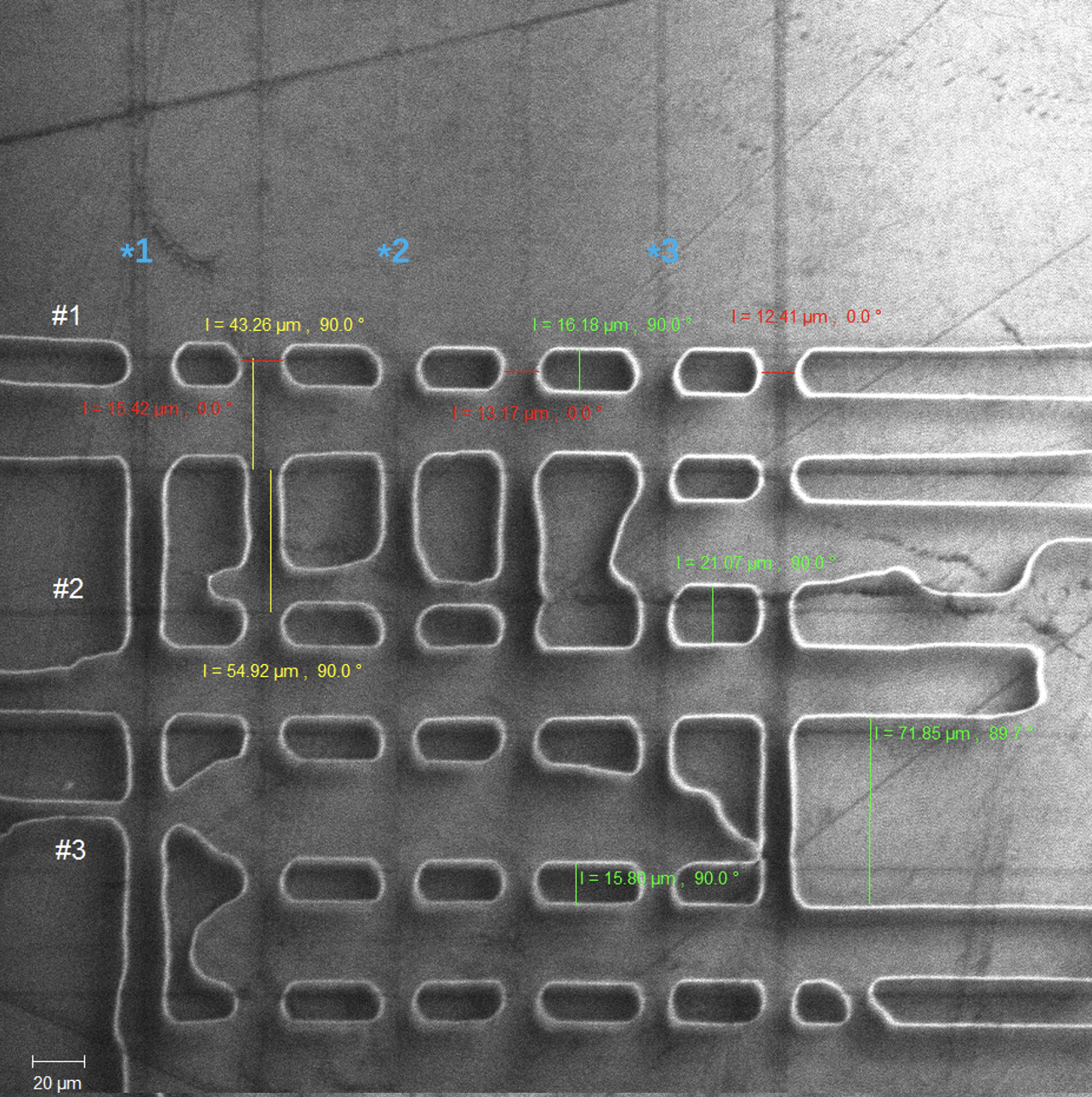
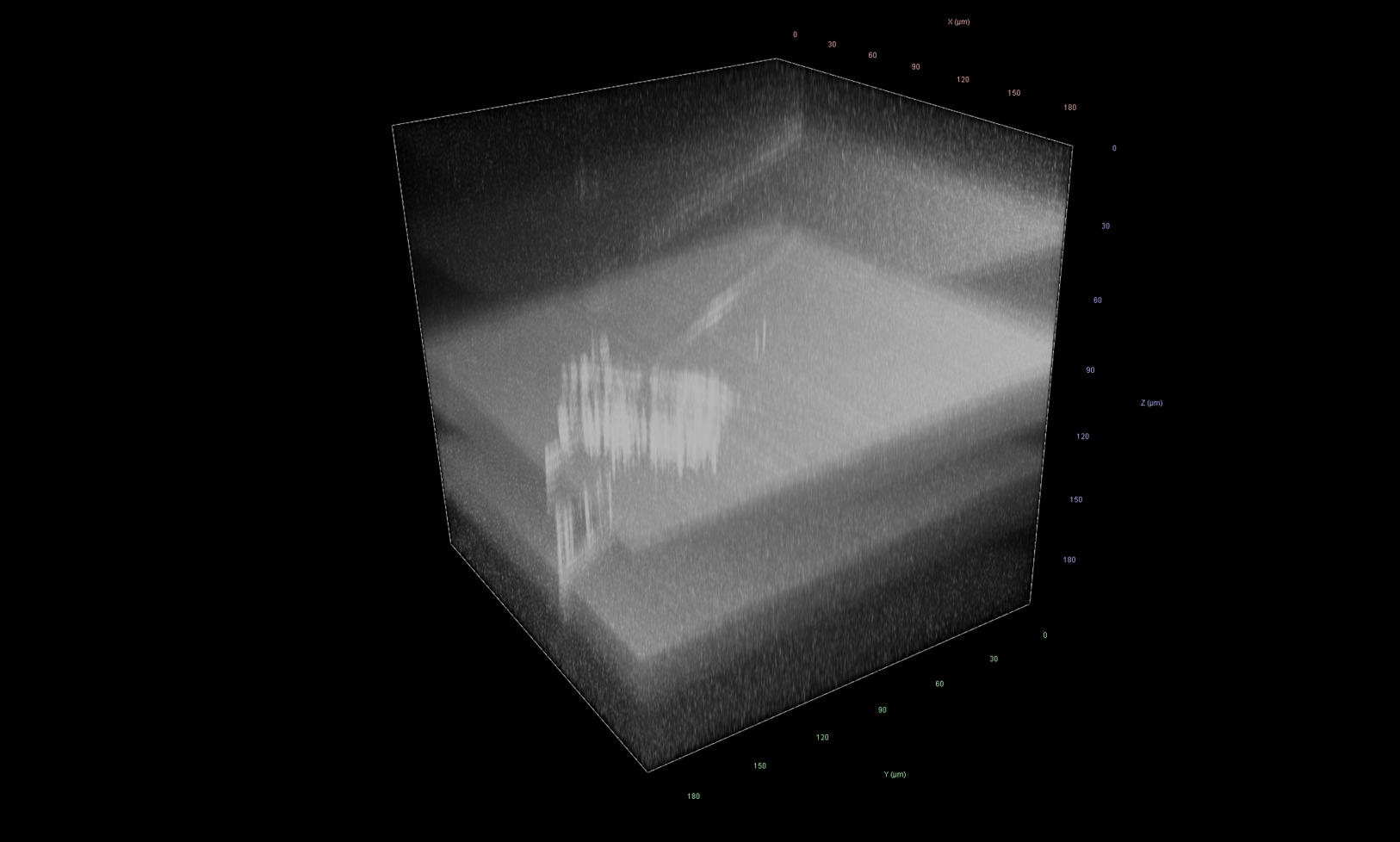
I received several trainings about on-chip calibration and measurement, as well as the operations of two-photon microscopy and SEM. Now I’m concentrating on doing calligraphic poling to fabricate periodically poled crystals. I set up a system aiming at high efficiency poling, which consists of x-y axis stages, a microscope for in-situ observation, and a controlling computer program. Considerable progress has been made so far (because part of this program is confidential, I cannot post too many details here).
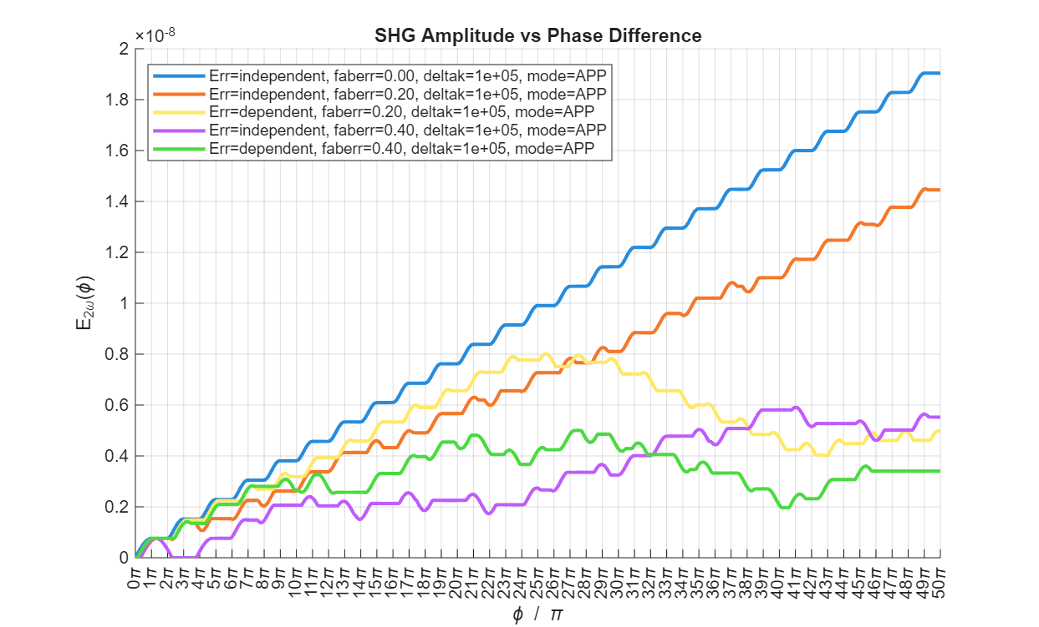
I also wrote a program in order to simulate the behavior of the SHG light after a certain phase difference between basic and SHG light. It’s very interesting to perform some code work in such a hardware-based research. I’ve already deployed it onto my github page, where you can find my other works on it.
2. Prof. Huafeng Liu’s Group: Fluorescence Image Restoration Based on Neural Networks. (2024.11 - Now)
As we all know, artificial intelligence is one of the hottest topics in everywhere nowadays. And it also gained popularity in optical engineering researching field. It’s the very thing everyone must to contemplate if don’t want to fall behind of times. So I talked with professor Liu, who is concentrating on AI + image restoration, then joined his research group.
Fluorescence microscopy plays a critical role in biomedical imaging, yet the captured 2D images often suffer from strong Gaussian noise due to weak signal intensity and limited exposure time. Existing self-supervised denoising methods avoid the need for clean image pairs but still struggle to recover fine structures under heavy noise. In this work, we propose a self-supervised denoising framework for 2D fluorescence microscopy images by combining Implicit Neural Representations (INRs) and a U-Net-based refinement network. The INR module learns a continuous coordinate-based mapping from spatial locations to pixel intensities, effectively suppressing high-frequency noise while preserving global structures. A subsequent U-Net refines the output to enhance local details. The entire framework is trained using only noisy images, without requiring ground-truth supervision. Experimental results demonstrate superior denoising performance and structural fidelity compared to existing self-supervised approaches, highlighting the potential of INR-guided architectures for real-world microscopy image restoration.
I’m currently working on a paper correlative to the content above and I suppose it can be published by November this year. Notably, I also have a patent of this method which is under review now.
3. Prof. Jianrong Qiu‘s Group: Tapered waveguide with controllable mode field diameter by composite laser direct writing method. (2024.9 - 2025.6)
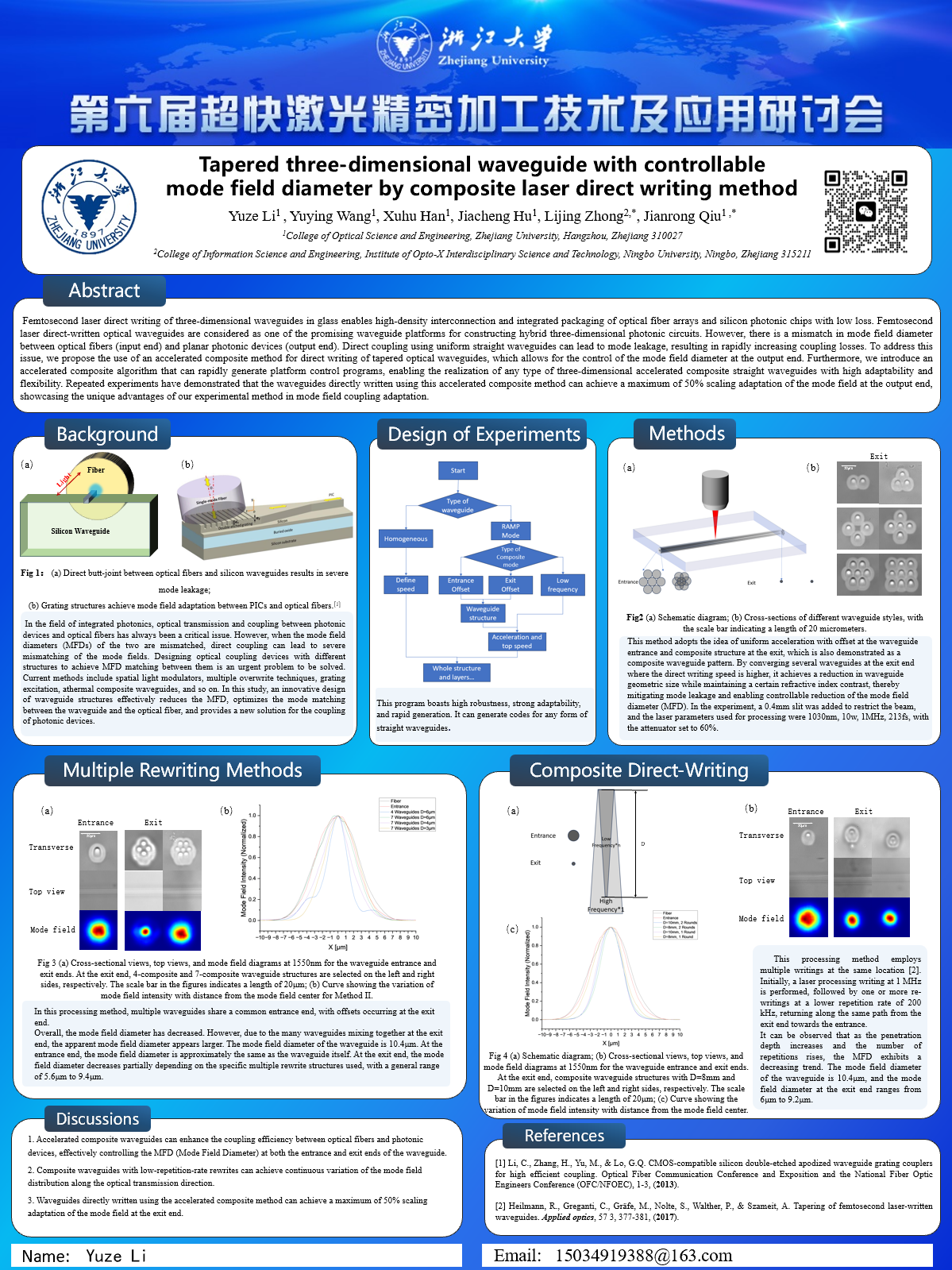
I primarily did researches as the title read in professor Qiu’s group. The research is based on the issue of mode field mismatching between optical fibers and optoelectronic devices. Typically, the mode field diameter (MFD) of optical fibers is around 10 micrometers, while the MFD of most optoelectronic devices does not exactly match that of the fiber. Directly couple them can introduce significant loss. This issue is particularly critical in the field of silicon photonic chips and requires urgent solutions.
Some existing solutions include composite treatments of fibers, both thermal and non-thermal, to reduce the coupling MFD, as well as using gratings for coupling. However, these methods can be quite complex. My main work focuses on using femtosecond lasers to inscribe tapered composite waveguides directly in glass bulk. This approach reduces the physical diameter of the waveguide while enhancing the refractive index contrast between the fiber core and the surrounding material.
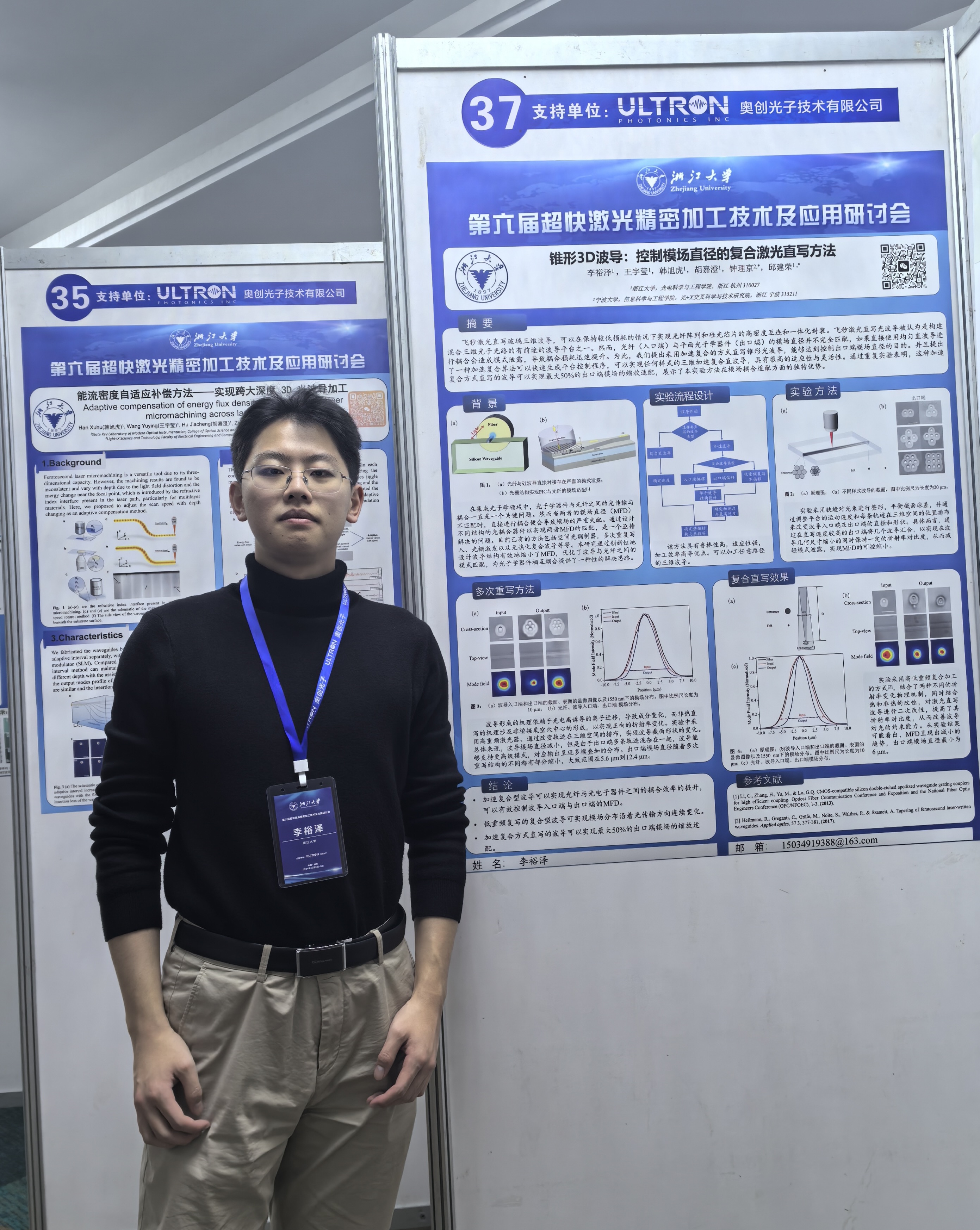
I have already presented a poster at the 6th Ultra-Fast Laser Precision Processing Technology and Application Symposium.
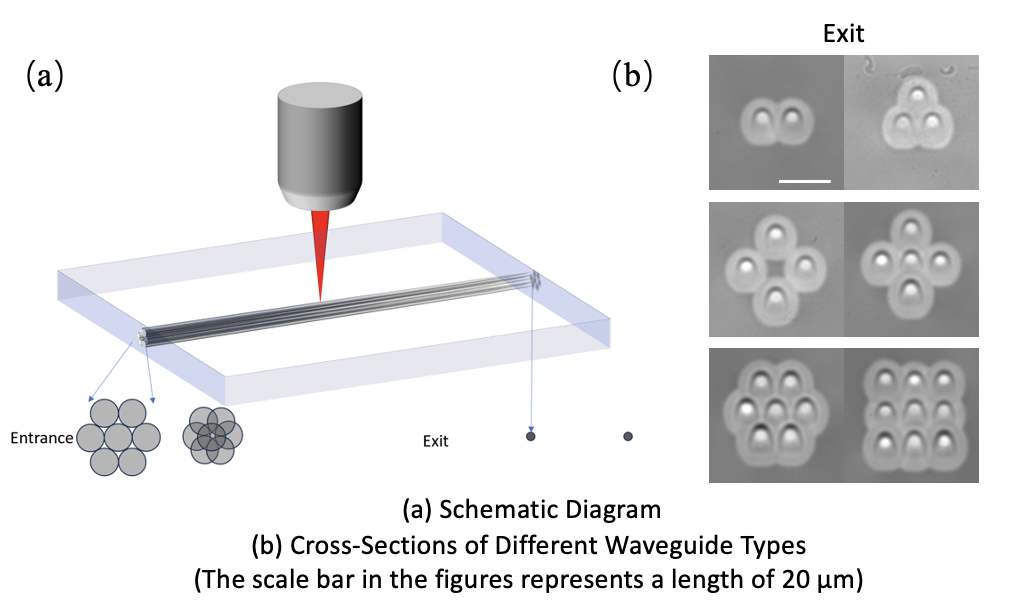
My main workflow consists of three parts. First, I use Aerotech’s precision control platform to perform femtosecond laser writing of 3D waveguides. Then, I cover the waveguide with acrylic material and expose the cross-section for subsequent polishing. Finally, I observe the mode field and losses through a microscope. The overall experimental cycle takes about one to two weeks, which means that I can only update the parameters I use in the experiment once a fortnight. Personally, I suppose this experimental process is quite complex. However, it did significantly improve my experimental skills and mindset. I learned how to adjust parameters and gradually narrow down the range of parameters among waveguides to achieve desired results. Therefore, I believe that if I can successfully complete this experiment and reach my goal, I should also be able to apply the same approach to other experiments or projects and achieve not bad results as well.
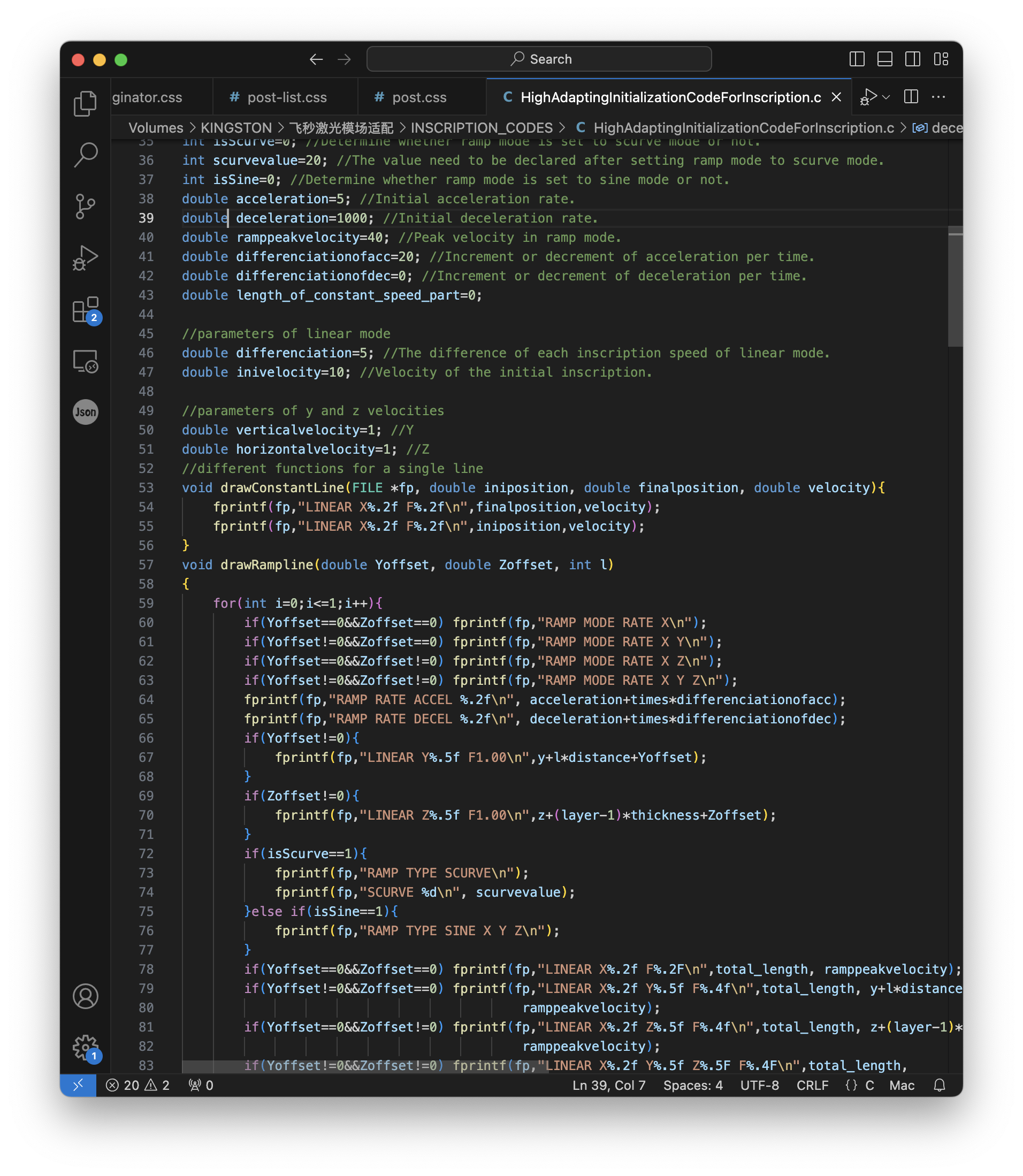
By the way, I developed a set of code in C aiming at generating G-code for platform movements. And I named it High Adaptive Initialization Code For Inscription, it worked really well. I applied it for generating dozens of G-code sets for all of the inscriptions I’ve ever done. Its excellency allows it to generate almost any linear and tapered composite waveguides you like.
They were all effective as wish. Just like these patterns (side view) below.
4. Dr. Yaoguang Ma‘s Group: Nano Fiber Tapering System. (2023.11 - 2024.6)

This research project has been successfully completed, culminating in the final evaluation in Jun 2024. And I’ll show my progress and interpretation of this project as below.
Fiber drawing is a crucial process in the production of optical fibers, which serve as the backbone of modern communication and sensing technologies. The process involves heating a preform—typically made of silica glass—to its softening point and then pulling it into a fine fiber with a consistent diameter.
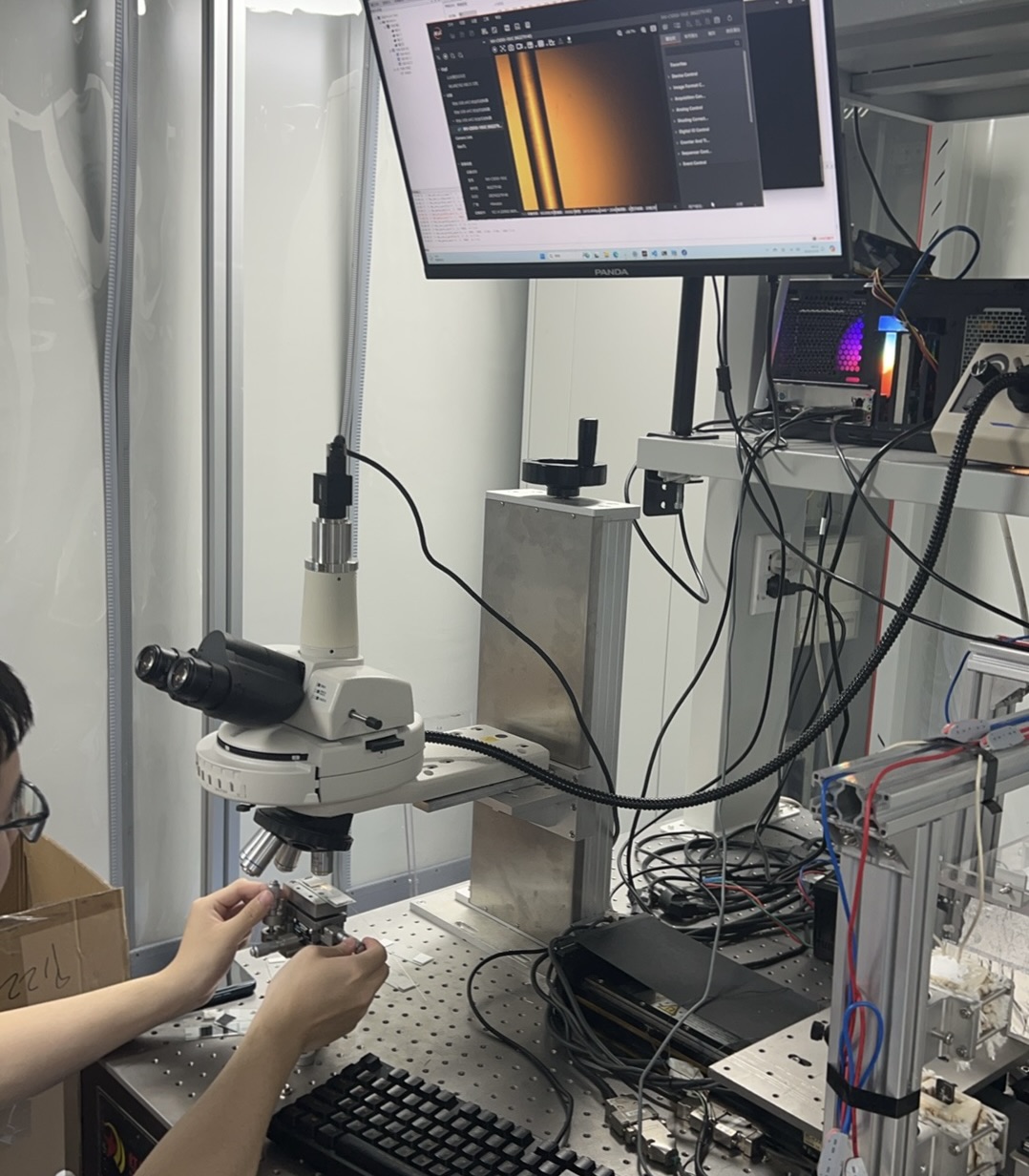
During this research experience, my primary focus was on studying the morphology of drawn optical fibers and validating their conformity to the exponential annealing model. As this was my first research project in my second college year, it did not yield too much academic output. However, it provided me with an excellent opportunity to acquire foundational knowledge and practical skills, such as stripping optical fibers, and using tools like ImageJ, OriginPro, and MATLAB for essential measurements.
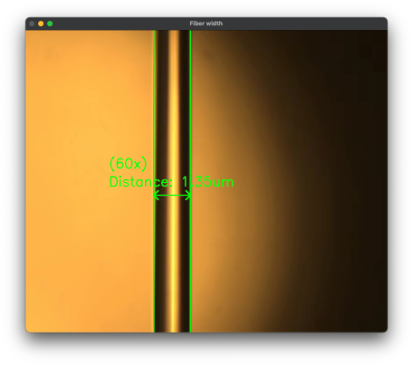
Notably, I identified inefficiencies in the manual measurement methods commonly used by my senior lab members for determining fiber diameters under a microscope. Sometimes It would take you an entire afternoon by just sitting in the lab and measuring the diameters constantly. To address this, I developed a Python-based program incorporating Canny edge detection to automate the measurement process. This tool achieved a recognition error of less than 5%, comparable to manual measurements and most important, the much faster measurement process.
Moving forward, I plan to further optimize this program and apply for a software copyright patent.
5. Prof. Sailing He‘s Group: Spectral Food Inspection — Non-contact Intelligent Freshness System for Food. (2024.3 - 2024.8)
The issue of food safety is something we must pay attention to in our daily lives, especially the freshness of perishable food. Consuming food that is not fresh can have very serious consequences. One of the research branches of Professor He’s group is studying the use of hyperspectral and Raman spectroscopy to measure the freshness of perishable food. A senior student introduced me to this research group, and I followed up on the project for a period of time. During this time, I learned the basic usage of hyperspectral instruments and how to correlate the freshness of food with its spectra. I believe this brought me one step closer to a deeper understanding of optics. This system elevated my understanding of optics from visible light and everyday optical applications to the spectral level (though it might also be due to the limited knowledge I had during my second year). In any case, I think I gained a lot during this research experience, including basic experimental thinking. It also broadened my perspective and expanded my vision within the field of optoelectronics research.

About this Post
Written by Yuze Li.